Clinic IQ: the clinic management app for health centres and clinics
Clinic IQ moves appointments, patient records, clinical notes, services and follow-ups from paper registers onto the phones and tablets your staff already use. It reads old handwritten registers with AI, and staff can work in it fully in Kannada.
- Running in a private clinic since January 2026
- Kannada on every key screen
- ABDM-ready architecture
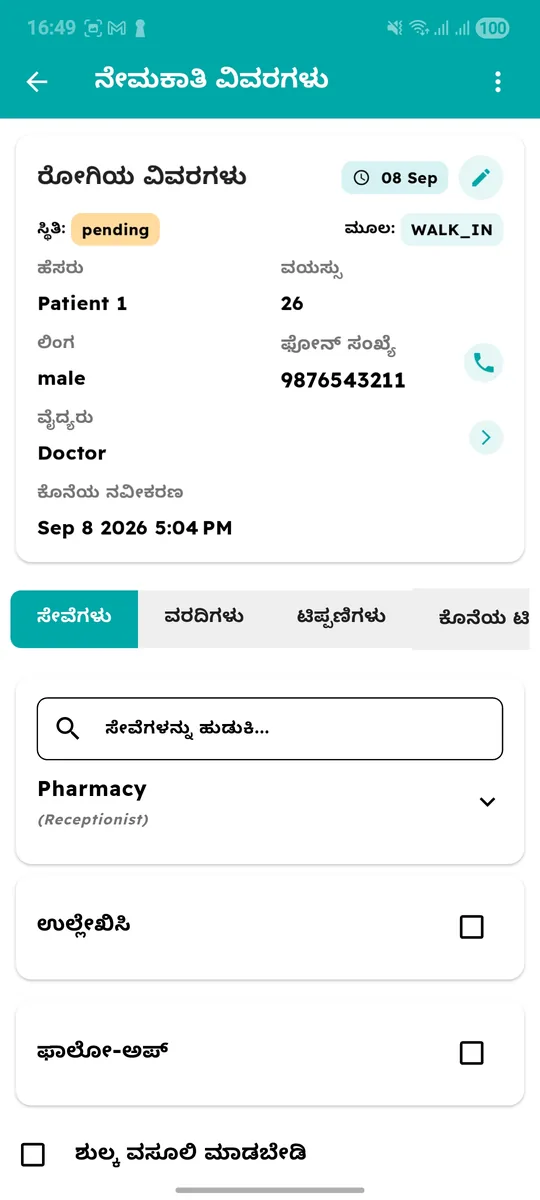
What problems does Clinic IQ solve in a Sub Health Centre?
Clinic IQ solves the paperwork, record-keeping and reporting problems that take staff time away from patients in Sub Health Centres and private clinics.
A Sub Health Centre (SHC) is the government health facility closest to the community, and the first place a rural patient goes for care. Its team is led by a Community Health Officer (CHO), who works with an Auxiliary Nurse Midwife (ANM) and a Multipurpose Worker (MPW). Much of their day still runs on paper registers.
Staff spend their day on registers
Registers, queues and repeated data entry consume the time that the CHO, ANM and MPW should spend on patient care.
Patient history is hard to find
Visit history and clinical notes sit in different books, so a returning patient's past treatment is slow to retrieve and continuity of care suffers.
Field systems have moved ahead of facilities
Digital systems for ASHA field workers are advancing, but the facility itself still needs a matching staff-facing platform.
Programmes need accurate, accountable records
Health programmes depend on accurate service records, role-based access and clean data, which handwritten tallies cannot guarantee.
How does Clinic IQ turn handwritten registers into digital records?
Clinic IQ uses Intelligent Document Processing to read a photograph of a handwritten register page and convert it into a structured table that staff can check, correct and export. A facility can digitise its existing paper history without re-typing it.
Photograph the page
A staff member photographs a register page on a phone.
Read the handwriting
ICR reads each handwritten entry, row by row, in Hindi, English or a mix of both.
Check every value
Each value is compared with its field label, and mismatches such as a wrong unit are flagged.
Correct and export
Staff review the flagged cells and export the page to Excel, JSON or PDF.
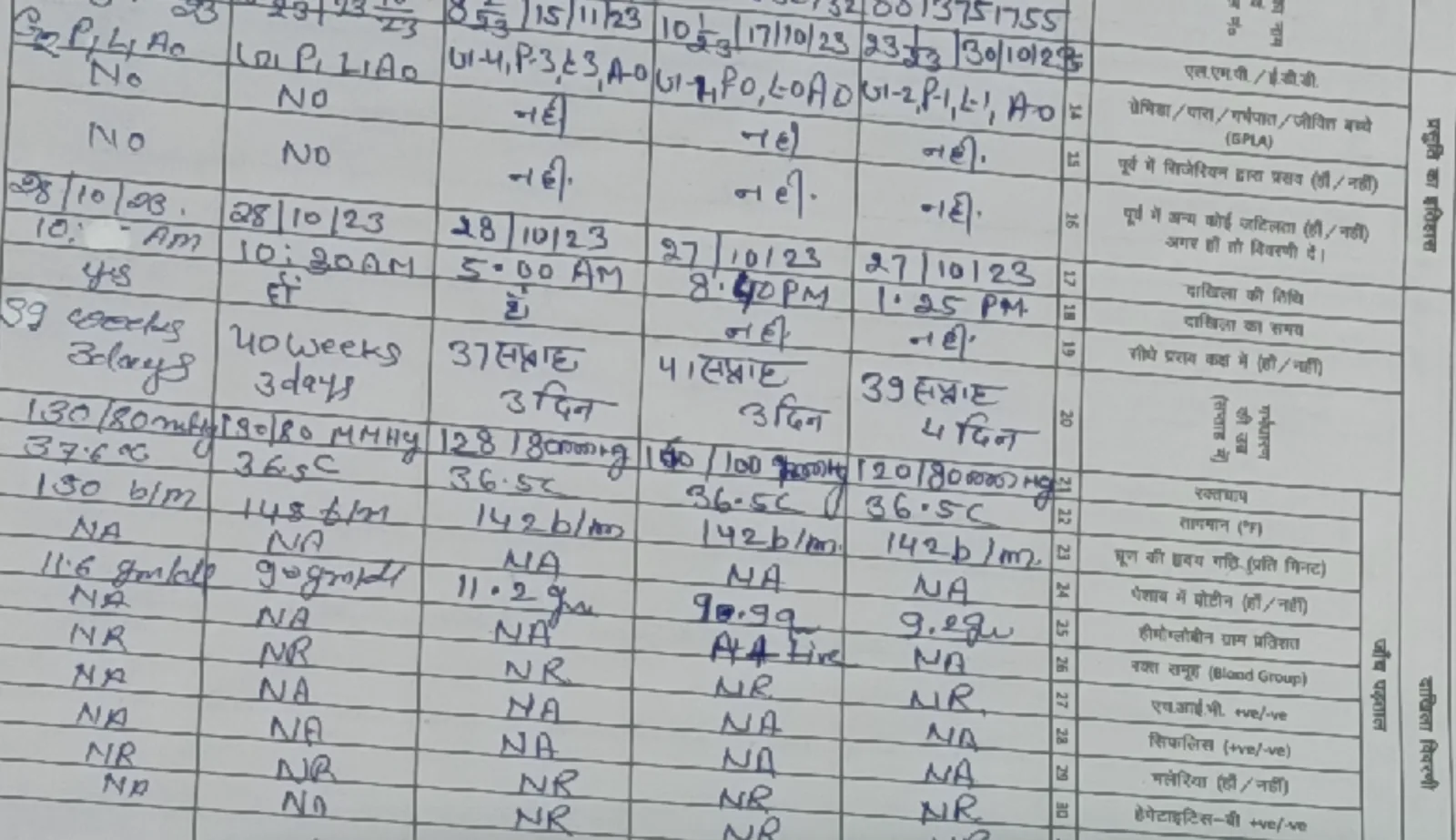
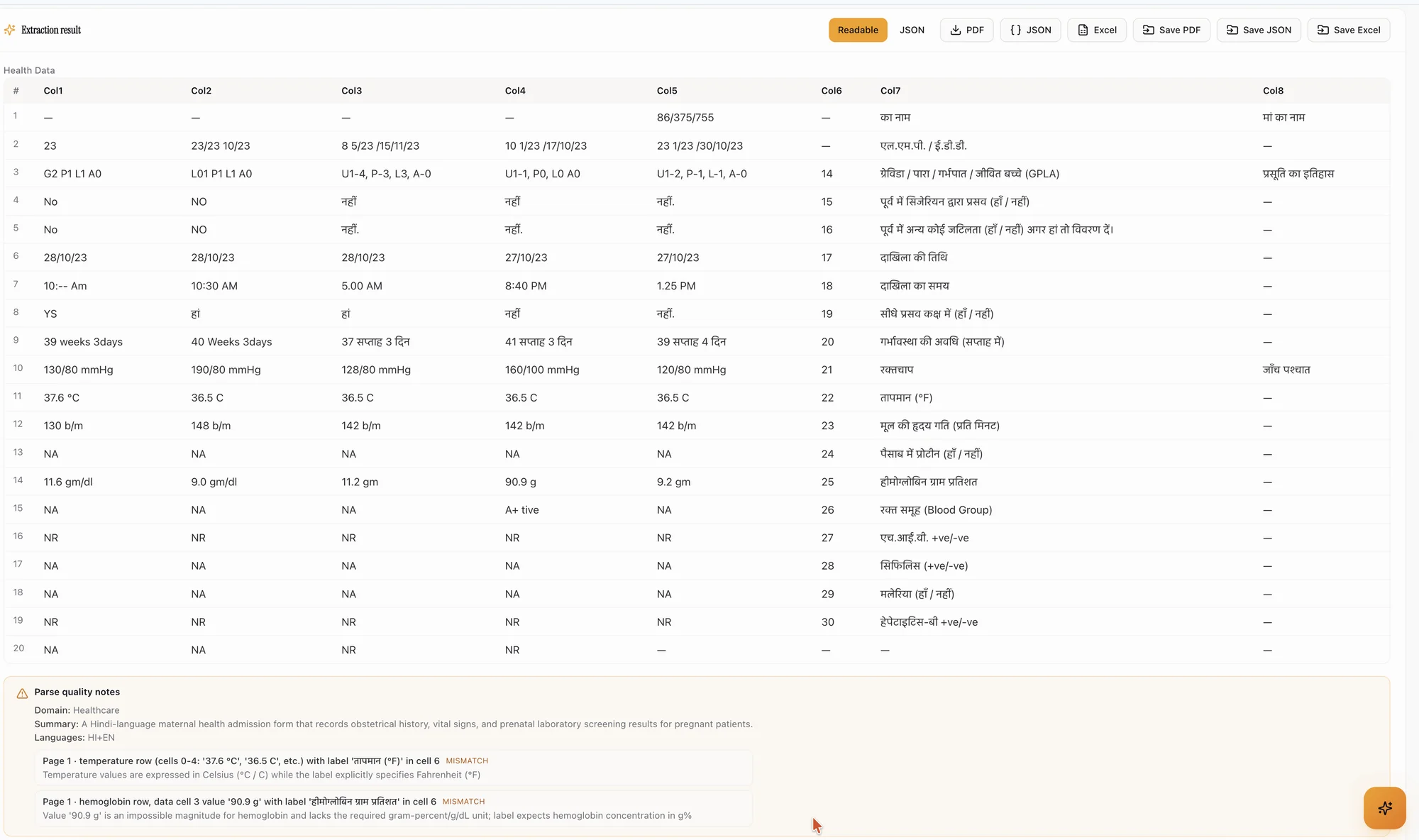
It understands the form
The system identified this page as a Hindi-language maternal health admission form and recorded its languages as Hindi and English.
It flags values that do not fit
It noticed that temperatures were written in Celsius while the label asks for Fahrenheit, and that a haemoglobin entry of "90.9 g" is not a possible value.
It exports in usable formats
Each page can be viewed as a readable table or saved as Excel, JSON or PDF, ready for records and reporting.
What changes for staff when a paper register moves into Clinic IQ?
Staff keep the same daily flow they know from paper registers, but each entry is made once and can be found again in seconds.
| Register used today | Where it lives in Clinic IQ | What staff gain |
|---|---|---|
| OPD register | Patient registration and today's appointment list | Enter once, find in seconds |
| Prescription and medicine issue slip | Services and pharmacy recorded against each visit | A printed slip in the facility's familiar format, set up during the pilot |
| Follow-up and referral book | A follow-up tab that shows who is due today | No page-flipping to chase patients |
| Monthly report tallies | A dashboard built from daily entries, with report formats set up with the department | No re-writing at month end |
An OPD (outpatient department) register is the daily log of every patient who visits without being admitted.
Can staff use Clinic IQ in Kannada, Hindi and other Indian languages?
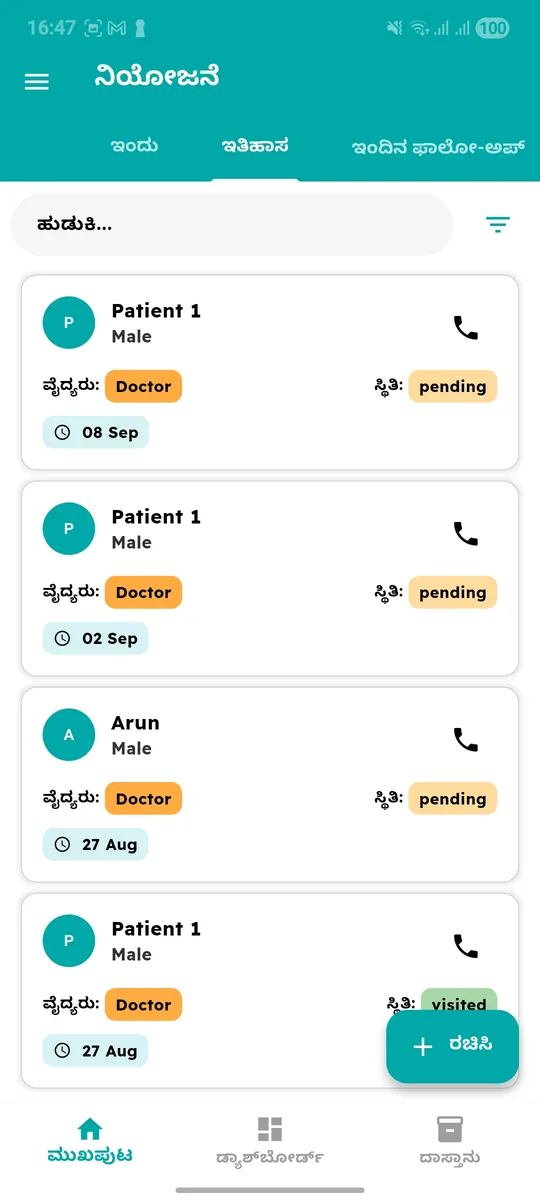
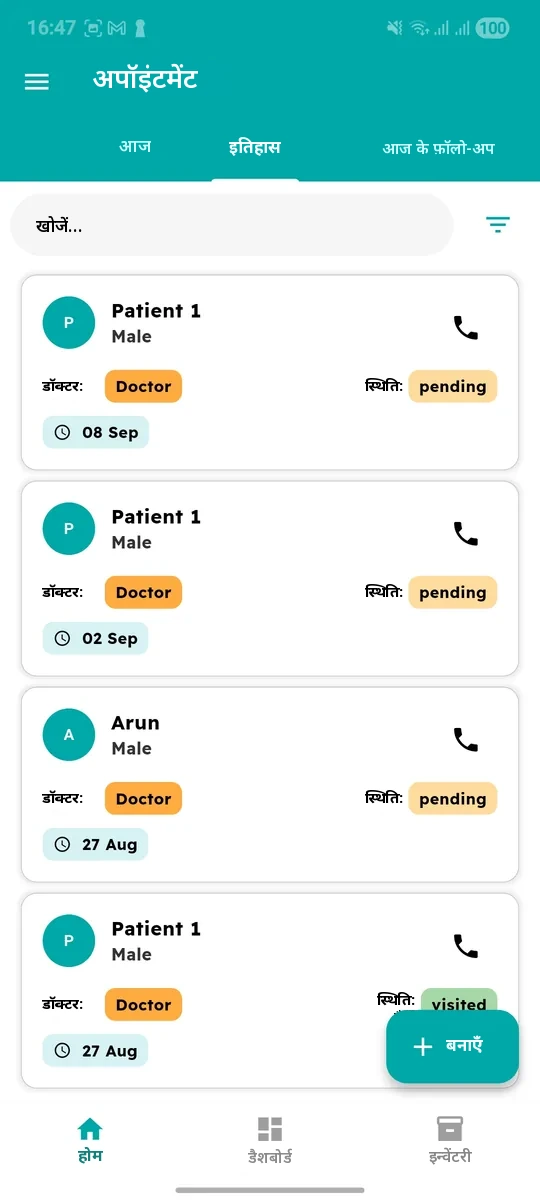
Yes. Every key screen in Clinic IQ is available in Kannada today, and the same interface can be set up in Hindi and other Indian languages, as the Hindi appointments screen below shows.
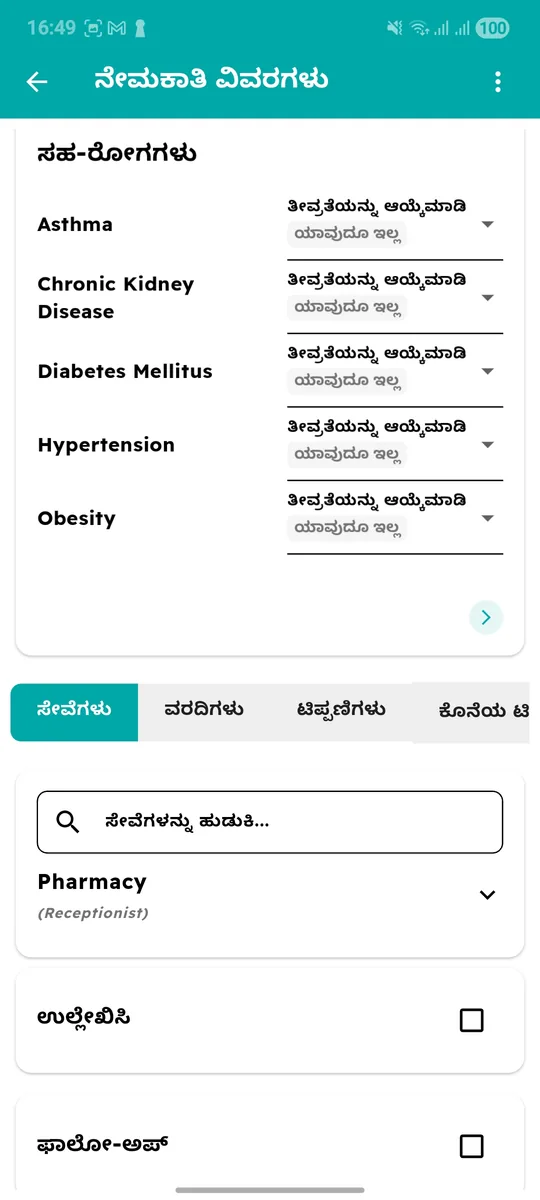
Staff who read and write in their own language every day can register patients, record services and check follow-ups without switching to English. Disease names and other medical terms can stay in English where staff expect them, as the comorbidities screen shows. The document reader already handles Hindi handwriting, so a register in the state's language can be digitised as well.
What does Clinic IQ include for a primary-care facility?
Clinic IQ includes eight core functions for primary-care facility operations, and all eight are working today. It is built for the Sub Health Centre team, that is the CHO, the ANM, the MPW and the facility admin, and it complements ASHA field systems and state platforms rather than replacing them.
Appointments and visits
Schedule visits, record walk-ins, and track each visit's status through to completion.
Patient records
Demographics, visit history and flags for non-communicable diseases (NCDs), such as diabetes and hypertension.
Clinical notes
Structured visit notes that build into a full timeline for each patient.
Kannada interface
A complete Kannada interface on every key screen, with other Indian languages available on request.
Role-based access
Clear permissions for each role: CHO, ANM, MPW and facility admin.
Real-time sync
Data stays consistent across every staff device in the facility.
Mobile-first
Works on the phones and tablets that facilities already use.
ABDM-ready
An architecture prepared for ABHA health IDs and national health data standards.
How does Clinic IQ meet government data, security and interoperability requirements?
Clinic IQ was designed for public-sector deployment from the start: the department owns the data and the code, the data stays in India, access is controlled by role, and the records follow national health data standards.
Data ownership
- The commissioning department owns 100% of the data.
- Full source code and documentation are handed over.
- There is no vendor lock-in on the data or the application.
Storage and residency
- Clinic IQ can be deployed on a State or MeitY-empanelled cloud.
- All data remains within India.
- Backup and disaster recovery stay in Indian geography.
Security and access
- Role-based access is recorded in audit logs.
- Staff sign in securely with role-based sessions.
- The design is aligned with the principles of the DPDP Act.
Interoperability
- The architecture is ABDM-ready and FHIR-ready.
- An API-first backend allows future integrations.
- Structured records support HMIS and health programmes.
- ABDM
- Ayushman Bharat Digital Mission, India's national programme for connected digital health records.
- ABHA
- Ayushman Bharat Health Account, the health ID that links a patient's records under ABDM.
- FHIR
- Fast Healthcare Interoperability Resources, the international standard for exchanging health records between systems.
- HMIS
- Health Management Information System, the government system that collects facility-level health data.
- MeitY-empanelled cloud
- A cloud provider approved by the Ministry of Electronics and Information Technology for government workloads.
- DPDP Act
- The Digital Personal Data Protection Act, 2023, India's law on handling personal data.
Does Clinic IQ work for private clinics?
Yes. Clinic IQ has been running in a private clinic since January 2026, where it also handles invoicing, pharmacy stock, pricing, and revenue and expenses. It was built with a practising doctor on the team.
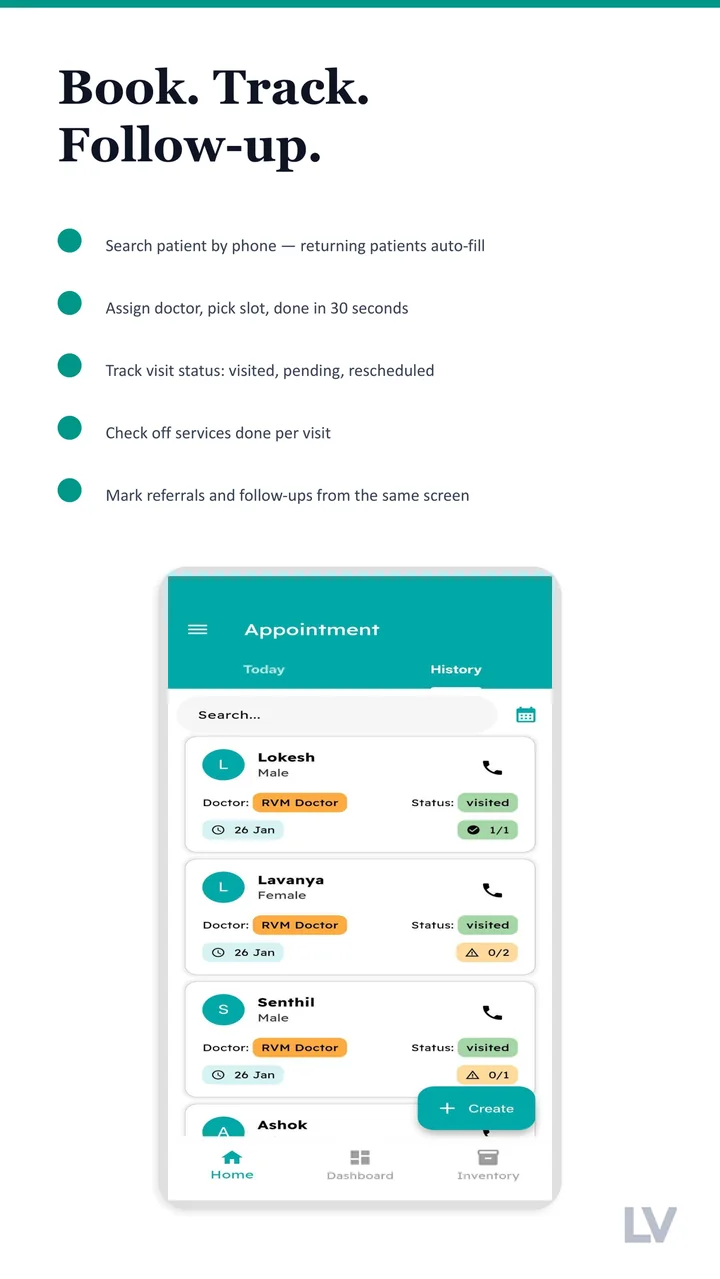
- Appointments in about 30 secondsSearch by phone number, and returning patients fill in automatically. Visits are tracked as visited, pending or rescheduled.
- InvoicingGenerate and share PDF invoices, and track payments with one tap.
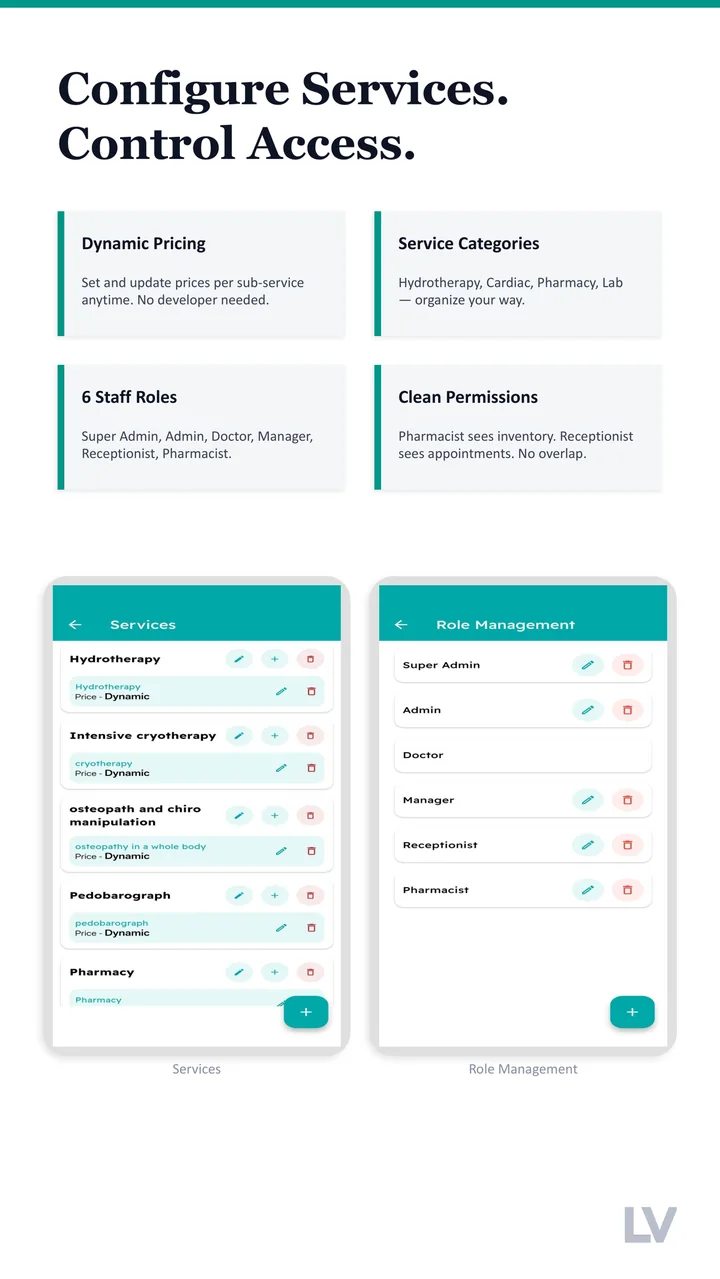
- Services and pharmacySet prices per sub-service, group services into categories, link prescriptions to appointments and manage inventory.
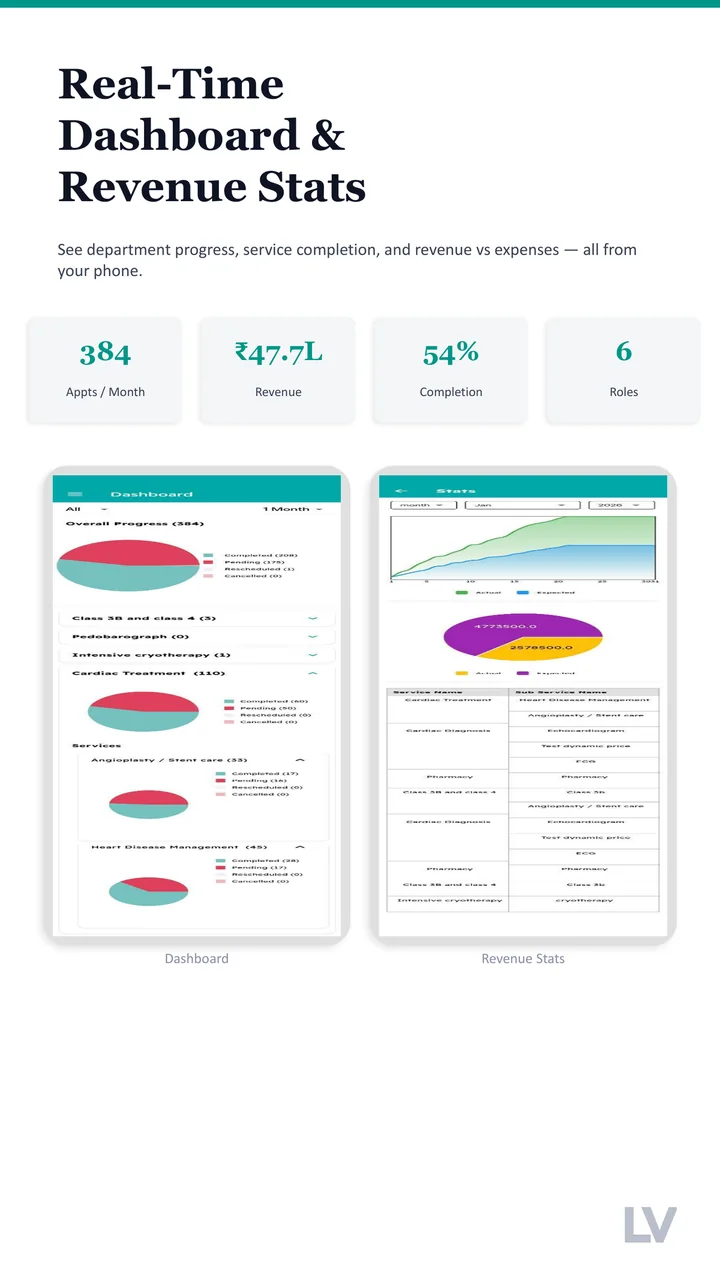
- Revenue and expensesCompare actual and expected revenue, with a service-wise profit and loss breakdown.
- Six staff rolesSuper Admin, Admin, Doctor, Manager, Receptionist and Pharmacist, each seeing only what the role needs.
What changed at the live clinic?
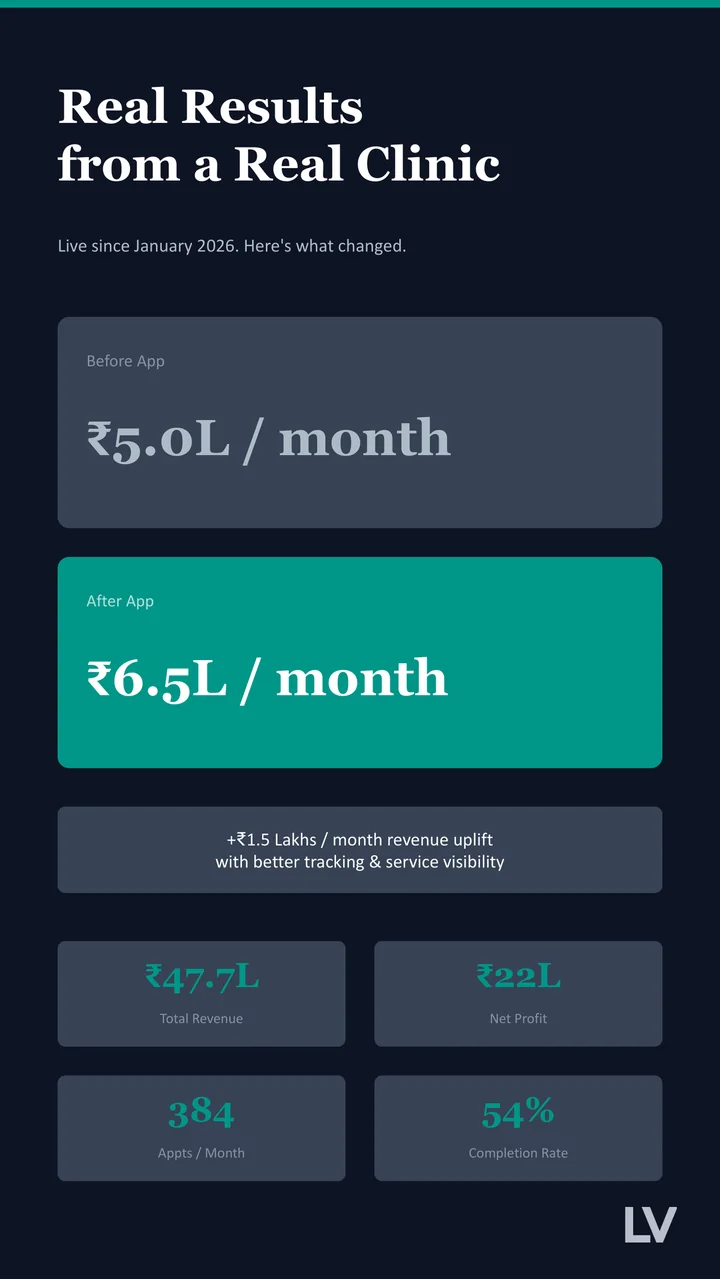
The clinic's monthly revenue rose from ₹5.0 lakh to ₹6.5 lakh after it moved its appointment and service tracking into the app, an increase of ₹1.5 lakh a month.
What do facilities ask about Clinic IQ?
These are the questions health departments and clinic owners ask most often before a demo. For anything else, call +91-9901014014.
Clinic IQ is a clinic management app built by Lenor Ventures for Sub Health Centres and private clinics. It covers appointments, patient records, clinical notes, services, pharmacy and follow-ups on the phones and tablets staff already use, and it replaces the daily paper registers with searchable records.
Yes. Every key screen in Clinic IQ is available in Kannada today, alongside English. Disease names and other medical terms can stay in English where staff expect them. For facilities in other states, the interface can be set up in other Indian languages, such as Tamil, Telugu, Malayalam, Hindi or Marathi.
Intelligent Document Processing (IDP) is the AI method Clinic IQ uses to read a photograph of a handwritten register and turn it into a structured table. Unlike basic OCR, it reads handwriting, matches each value to its field and flags values that do not make sense, such as a wrong unit.
The commissioning government department owns 100% of the data. Lenor Ventures hands over the full source code and documentation, so there is no vendor lock-in on either the data or the application. Clinic IQ can be deployed on a State or MeitY-empanelled cloud, and all data, backups and disaster recovery stay in India.
Clinic IQ is built on an ABDM-ready and FHIR-ready architecture, which means its records are structured to connect with Ayushman Bharat Digital Mission services, including ABHA health IDs. Its API-first backend also allows later integration with HMIS and state health programmes. Integration is scoped with each department during setup.
Yes. Clinic IQ is mobile-first, so the Community Health Officer, Auxiliary Nurse Midwife and Multipurpose Worker can use it on the phones and tablets available at the Sub Health Centre. Data syncs in real time across devices, so a patient registered by one team member appears immediately on another's screen.
Yes. Clinic IQ has run in a private clinic since January 2026. For private clinics it adds PDF invoicing, service-wise pricing, pharmacy stock, and revenue and expense tracking. The live clinic's monthly revenue rose from ₹5.0 lakh to ₹6.5 lakh after it moved its tracking into the app.
A pilot starts with a demo call on +91-9901014014 or an email to support@lenorventures.com. During the pilot, Lenor Ventures sets up the facility's staff roles, its printed prescription slip format and its monthly report formats with the department or clinic, so staff keep the formats they already know.
How can your facility start using Clinic IQ?
Your facility can start with a short demo, followed by a pilot in which we set up your roles, slip formats and report formats with your team.
Or email support@lenorventures.com